Makarasana (Crocodile Pose) – How to Practice, Benefits, and Precautions
Makarasana, derived from the Sanskrit words makar (crocodile) and asana (pose), mimics the posture of a resting crocodile. It is a deeply restorative yoga pose
Incorporating Makarasana into daily practice is a simple yet powerful way to maintain overall well-being amidst modern life’s demands.
How to do Makarasana
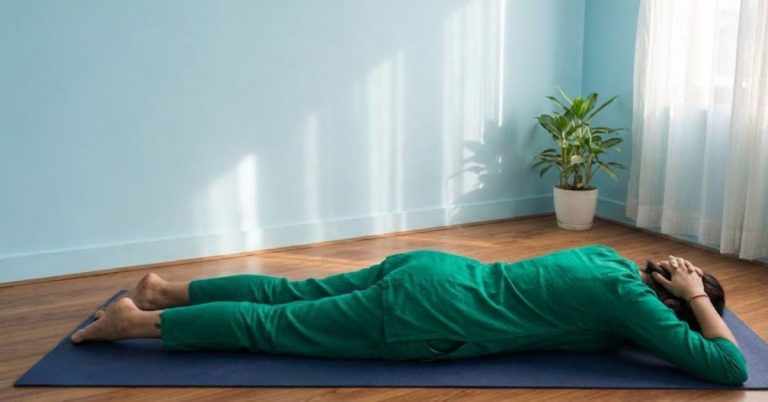
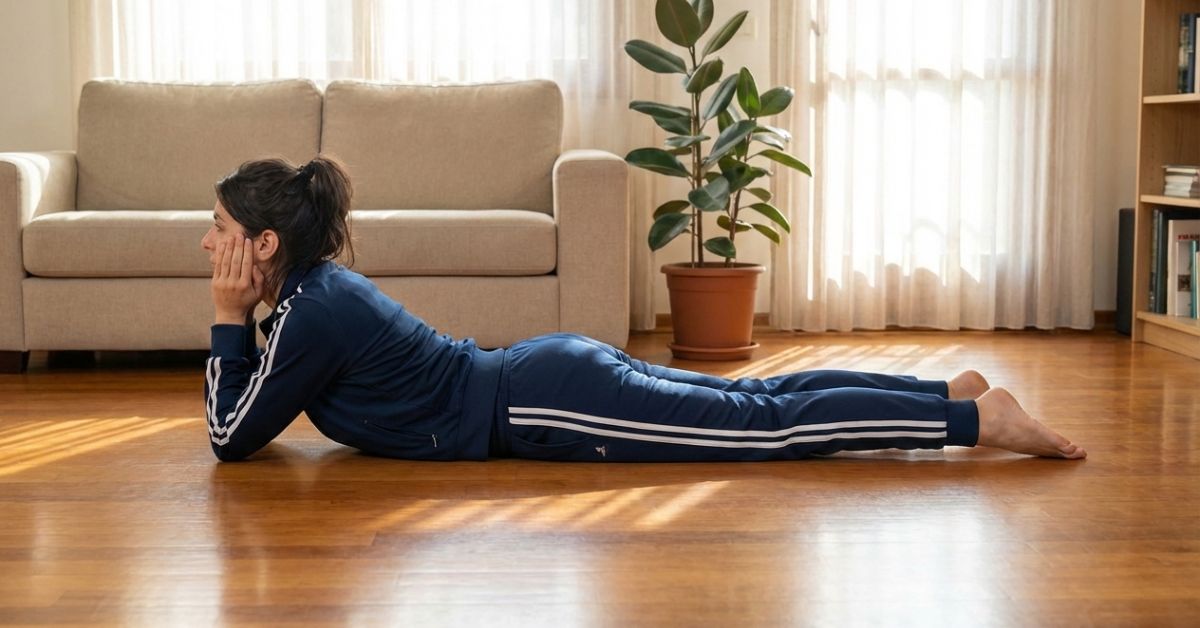
- Lie flat on your stomach with your legs extended and your feet apart.
- Place one hand beneath the opposite shoulder and grasp it lightly. Repeat with the other hand, grasping the other shoulder.
- Rest your chin on your clasped hands, with your elbows on the floor.
- Close your eyes and relax your entire body.
- Breathe deeply and hold the pose, focusing on your breath and letting go of tension.
- To release, gently lower your hands and legs and relax before getting up slowly.
Health Benefits:
- The relief of sciatica, slip disc problems, and pain in the lower back and knees
- Lessening of stress and aiding in the depression management
- better lung activity and keeping the blood pressure under control
- Total body relaxation
- Back muscle loosening
- Stress reduction
Mental & Physical Wellness:
- Encouragement of calmness and freshness
- Dissipation of the consequences of a brisk and stressful life
- Contributions to the prevention of diseases related to lifestyle such as hypertension and neck degeneration due to poor posture
Breathing: Natural and rhythmic, or practise inhaling, moving the awareness up along the spine from the tail bone to the neck and exhaling, bringing the awareness back down from the neck to the tail bone. Feel the breath moving up and down the spine. This will quickly activate the healing energies in this area. For lower back pain due to tension, concentrate on this area and feel it expanding and relaxing with every inhalation and exhalation.
Duration: For as long as is comfortable.
Precautions for Makarasana
- Avoid this pose during the second or third trimester of pregnancy.
- Be cautious if you have a recent lower back or wrist injury.
for more information about Makarasana (Crocodile Pose) you can visit ishavasyam yoga school in india and join yin yoga teacher training in india